
In a healthy brain, blood and cerebrospinal fluid circulate in balance, flowing in and then draining to maintain the right pressure. In cases of venous sinus stenosis, one or more of the large draining veins becomes narrowed. This slows the draining, and fluid builds up and creates pressure. The pressure caused by venous sinus stenosis can create symptoms including headache, vision disturbances, and pulsatile tinnitus. An advanced procedure called venous sinus stenting (VSS) can open the narrowed vein and restore healthy balance. The procedure is minimally invasive, performed through a small incision in the thigh or wrist. Patients typically go home the same day.
Contact Dr. Boddu on WhatsApp: +971 508507379 for more information
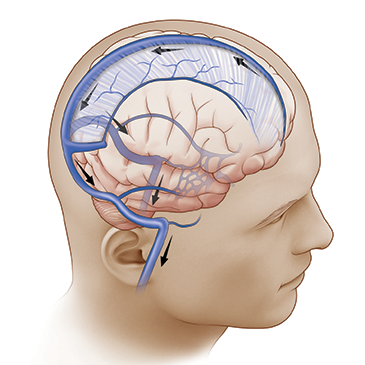
In a brain with healthy blood vessels, blood continually enters and drains, and that balance allows the brain to maintain normal intracranial pressure. This illustration shows normal blood drainage in healthy veins.
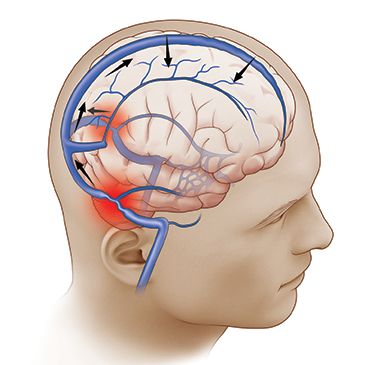
Abnormal narrowing in the draining veins causes a buildup of pressure that can lead to pulsatile tinnitus, headache, and vision problems. This illustration shows blood backing up in the veins due to stenosis, putting pressure on the brain.
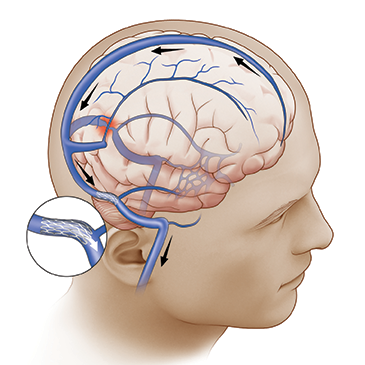
The insertion of a tiny stent can restore the blood vessel to normal width, allowing healthy draining and alleviating symptoms. This illustration shows healthy drainage restored after a stent is placed at the narrowed portion of the draining vein.
Dr. Boddu has treated hundreds of patients with intracranial hypertension using this stenting procedure. These venous stents hold the narrowed part of the brain open, restoring blood flow and relieving the symptoms of intracranial hypertension, which include headache, visual disturbances, and the whooshing sound of pulsatile tinnitus. After a decade of practicing in New York, Dr. Boddu is now available in Dubai.
The best way to contact Dr. Boddu is to use WhatsApp: +971 508507379
Illustrations by Thom Graves, CMI
Material on this site is for informational purposes only and is not a substitute for medical advice. Dr. Boddu cannot provide individual medical advice online; please contact his office for assistance.
To request an appointment with Dr. Boddu, please use WhatsApp: +971 508507379